
×
info@m2today.com
jobs@m2today.com
investments@m2today.com
WELCOME TO THE LABORATORY OF CREATIVITY, INNOVATION AND DIGITAL SOLUTIONS
STRATEGY: PRODUCT, SALES. COMPETITION.
NEW PRODUCTS. NEW SALES. NEW COMPETITION.
NEW PRODUCTS. NEW SALES. NEW COMPETITION.
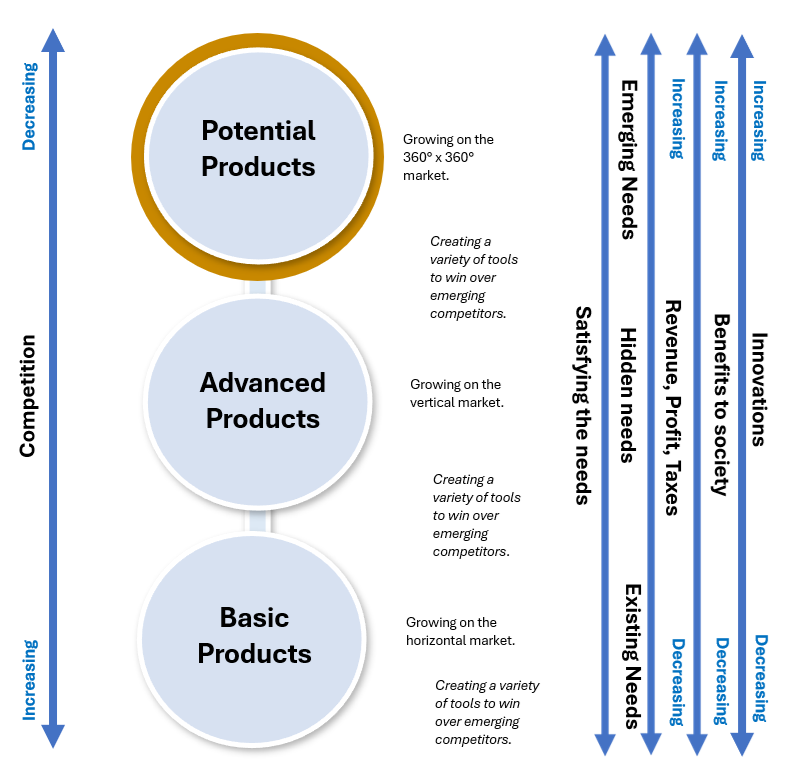
PRODUCTS AND STRATEGY.
The company's product development plan is strategically important.
Product development provides benefits:
1. Win over competitors
2. Retain customers
3. Attract new customers
4. Increase added value
5. Accumulate technologies
6. Increase learning assets
7. Reduce costs
8. Build an innovative team
9. Increase the level of social contribution to society
10. Increase the level of economic contribution in the form of taxes, technologies, etc.
11. Identify hidden customer needs
12. Develop the market
To build a product development strategy, we/you need:
1. Data
2. Analytics
3. Innovative thinking
One more important note:
Product development strategy is 2-ways action:
1. May be done by the company for itself
2. May be sold as a service to other companies
The company's product development plan is strategically important.
Product development provides benefits:
1. Win over competitors
2. Retain customers
3. Attract new customers
4. Increase added value
5. Accumulate technologies
6. Increase learning assets
7. Reduce costs
8. Build an innovative team
9. Increase the level of social contribution to society
10. Increase the level of economic contribution in the form of taxes, technologies, etc.
11. Identify hidden customer needs
12. Develop the market
To build a product development strategy, we/you need:
1. Data
2. Analytics
3. Innovative thinking
One more important note:
Product development strategy is 2-ways action:
1. May be done by the company for itself
2. May be sold as a service to other companies
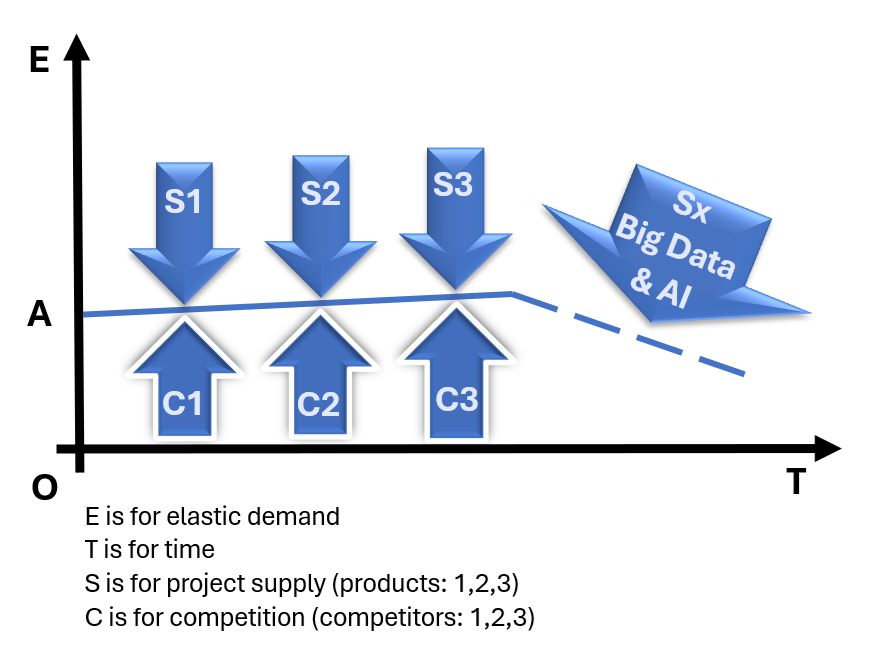
TO MANAGE THE ELASTICITY OF DEMAND FOR THE COMPANY'S PRODUCT.
Business competitors are a big problem for any company. It is usually difficult for any company to increase its profits and sell a product at a high profit for a long time. If competitors offer a similar product at a lower price, the company will lose its customers or profits. Filling the product with new features helps to retain customers.
The features for the product upgrade can vary significantly. New product features can include new features of the product itself as well as services, information and networking.
With deep analysis, you can group individual new customer needs into cohorts and update the product and service.
Elastic demand is an economic concept that occurs when the quantity of a product responds to a change in the price of the product or in other characteristics.
Deep analysis allows a company to identify options that will allow the company to outperform its competitors. Advanced companies analyze over 200 characteristics.
Business competitors are a big problem for any company. It is usually difficult for any company to increase its profits and sell a product at a high profit for a long time. If competitors offer a similar product at a lower price, the company will lose its customers or profits. Filling the product with new features helps to retain customers.
The features for the product upgrade can vary significantly. New product features can include new features of the product itself as well as services, information and networking.
With deep analysis, you can group individual new customer needs into cohorts and update the product and service.
Elastic demand is an economic concept that occurs when the quantity of a product responds to a change in the price of the product or in other characteristics.
Deep analysis allows a company to identify options that will allow the company to outperform its competitors. Advanced companies analyze over 200 characteristics.
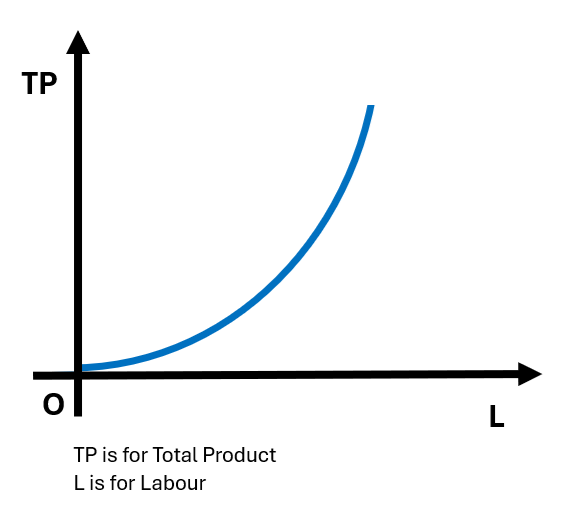
UNIQUE VOLUME OF OFFERS WITH LOW LABOR COSTS PER UNIT OF DIGITAL PRODUCTS.
Digital products have high returns if their marketing has been well-done.
Marketing can be: external and internal marketing, as well as pre- , in- and after-marketing.
The development, promotion and sales of digital products has the following characteristics:
1. Low labor costs to get extra (endless) number of the same digital products
2. Normal marketing costs for promotion
3. Extra low costs for promotion new manufacturers’ products using:
a. Customer-installed apps
b. Customer-friendly web portal
4. Normal costs for customer care
The chart shows the dependence of the returns on the labor costs.
The chart does not include hardware costs (such as servers), Equipment costs can be treated as long-term investments in equipment in financial statements.
Since labor is very expensive, producing successful digital products is considered a worthwhile investment.
Digital products have high returns if their marketing has been well-done.
Marketing can be: external and internal marketing, as well as pre- , in- and after-marketing.
The development, promotion and sales of digital products has the following characteristics:
1. Low labor costs to get extra (endless) number of the same digital products
2. Normal marketing costs for promotion
3. Extra low costs for promotion new manufacturers’ products using:
a. Customer-installed apps
b. Customer-friendly web portal
4. Normal costs for customer care
The chart shows the dependence of the returns on the labor costs.
The chart does not include hardware costs (such as servers), Equipment costs can be treated as long-term investments in equipment in financial statements.
Since labor is very expensive, producing successful digital products is considered a worthwhile investment.
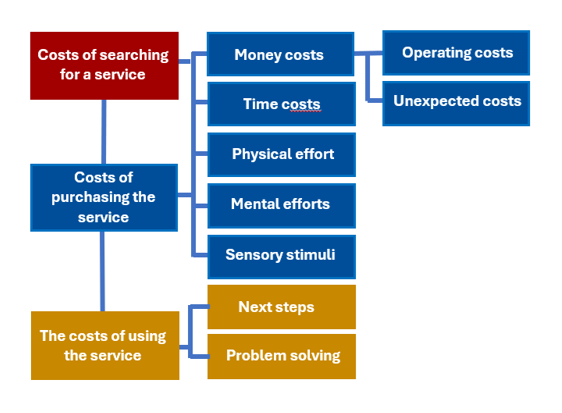
TO MAKE PRODUCT SEARCH EASIER AND COST LOWER.
Searching for the necessary information and the necessary product (service) is a very expensive process. That is why, Google company has become a very expensive giant.
The costs to any individual of finding, acquiring, and using a product include:
1. Search costs:
a. Monetary costs
b. Time costs
c. Physical costs
d. Psychological costs
e. Sensory
2. Cost of purchase:
a. Monetary costs
b. Time costs
c. Physical costs
d. Psychological costs
e. Sensory
3. Cost of use:
a. Cost of identifying a problem
b. Cost of solving a problem and its consequences
4. Monetary costs:
a. Cost of the product and payment
b. Unforeseen expenses
Reducing some of these costs can encourage the buyer to change the seller of the product (service) and choose a seller of a "saving" product (service).
Google does not solve all search problems today. Google solves only part of them. Google's workforce resources are limited, like any other company's resources.
The emergence of new search companies is inevitable. Here are some incentives:
1. Increased global buyer demand
2. Increased local buyer demand
3. Increased buyer awareness
4. Increased buyer demand for accurate information
5. Increased buyer demand for time savings
Searching for the necessary information and the necessary product (service) is a very expensive process. That is why, Google company has become a very expensive giant.
The costs to any individual of finding, acquiring, and using a product include:
1. Search costs:
a. Monetary costs
b. Time costs
c. Physical costs
d. Psychological costs
e. Sensory
2. Cost of purchase:
a. Monetary costs
b. Time costs
c. Physical costs
d. Psychological costs
e. Sensory
3. Cost of use:
a. Cost of identifying a problem
b. Cost of solving a problem and its consequences
4. Monetary costs:
a. Cost of the product and payment
b. Unforeseen expenses
Reducing some of these costs can encourage the buyer to change the seller of the product (service) and choose a seller of a "saving" product (service).
Google does not solve all search problems today. Google solves only part of them. Google's workforce resources are limited, like any other company's resources.
The emergence of new search companies is inevitable. Here are some incentives:
1. Increased global buyer demand
2. Increased local buyer demand
3. Increased buyer awareness
4. Increased buyer demand for accurate information
5. Increased buyer demand for time savings
DERIVATIVES.
A real estate derivative is a financial instrument whose value is based on the price of real estate. The core uses for real estate derivatives are: hedging positions, pre-investing assets and re-allocating a portfolio. The major products within real estate derivatives are: swaps, futures contracts, options (calls and puts) and structured products. Each of these products can use a different real estate index.
A property derivative is a specialized financial product influenced by changes in the value of an underlying real estate asset, typically represented by an index. This innovative instrument enables investors to gain exposure to specific real estate markets without the need for physical property transactions:
1. Real estate derivatives allow investors to gain exposure to the real estate market without actually owning real estate assets.
2. These derivatives track the return of a real estate return index such as the NPI or NAREIT.
3. Investors can also often trade derivatives on individual REITs listed on exchanges.
A real estate derivative is a financial instrument whose value is based on the price of real estate. The core uses for real estate derivatives are: hedging positions, pre-investing assets and re-allocating a portfolio. The major products within real estate derivatives are: swaps, futures contracts, options (calls and puts) and structured products. Each of these products can use a different real estate index.
A property derivative is a specialized financial product influenced by changes in the value of an underlying real estate asset, typically represented by an index. This innovative instrument enables investors to gain exposure to specific real estate markets without the need for physical property transactions:
1. Real estate derivatives allow investors to gain exposure to the real estate market without actually owning real estate assets.
2. These derivatives track the return of a real estate return index such as the NPI or NAREIT.
3. Investors can also often trade derivatives on individual REITs listed on exchanges.
LEARN MORE:
Learn more about Business Clustering to boost your business.
Learn more how to Grow the Market.
Learn more about Digital Wealth.
Learn more how to use your Compound Return.
Learn more how to use your Experience as E-fuel.
Learn more about Artificial Intelligence (AI) technology.
Contact us to get access to the Model.
Learn more about Business Clustering to boost your business.
Learn more how to Grow the Market.
Learn more about Digital Wealth.
Learn more how to use your Compound Return.
Learn more how to use your Experience as E-fuel.
Learn more about Artificial Intelligence (AI) technology.
Contact us to get access to the Model.
Contact us:
General information:
info@m2today.com
Jobs:
jobs@m2today.com
Investments:
investments@m2today.com